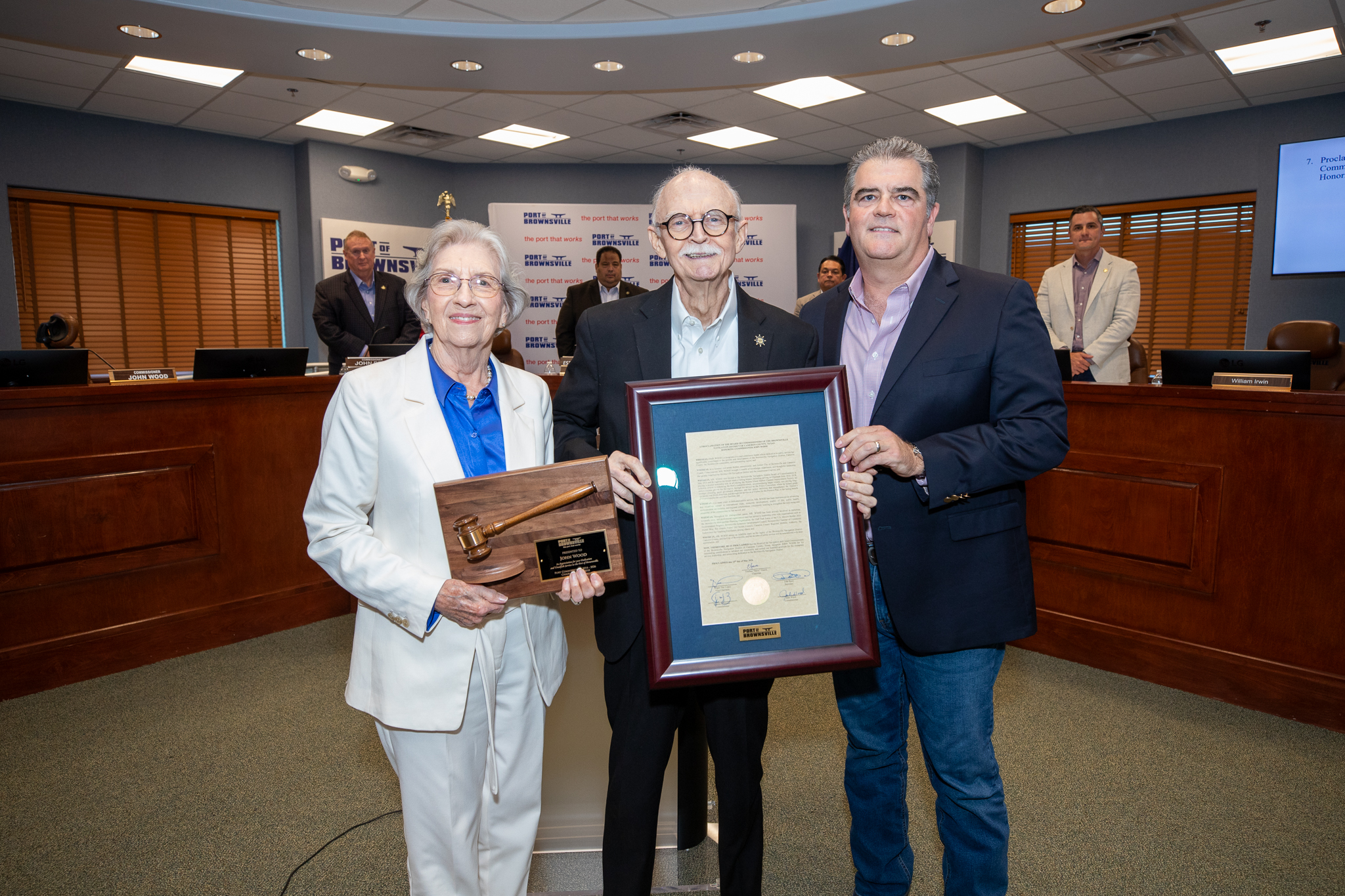
Commissioner John Wood, Place 2, is joined by his wife and son after receiving a proclamation and award of recognition for his years of dedicated service to the district at a regular BND board meeting held May 13, in the BND boardroom.
By Christina R. Garza/Port of Brownsville
BROWNSVILLE, Texas — May 21, 2026 —John Wood arrived in Brownsville in 1970 as a 23-year-old Southwestern Bell company manager. More than five decades later, he is retiring from public service after helping shape some of the city’s most consequential civic projects, from establishing City Hall on the former site of the U.S. Federal Courthouse to negotiating an international bridge that carries millions of dollars in commerce each day. His work also includes revitalizing one of Cameron County’s most underserved neighborhoods and helping anchor the Rio Grande Valley’s leading maritime port.
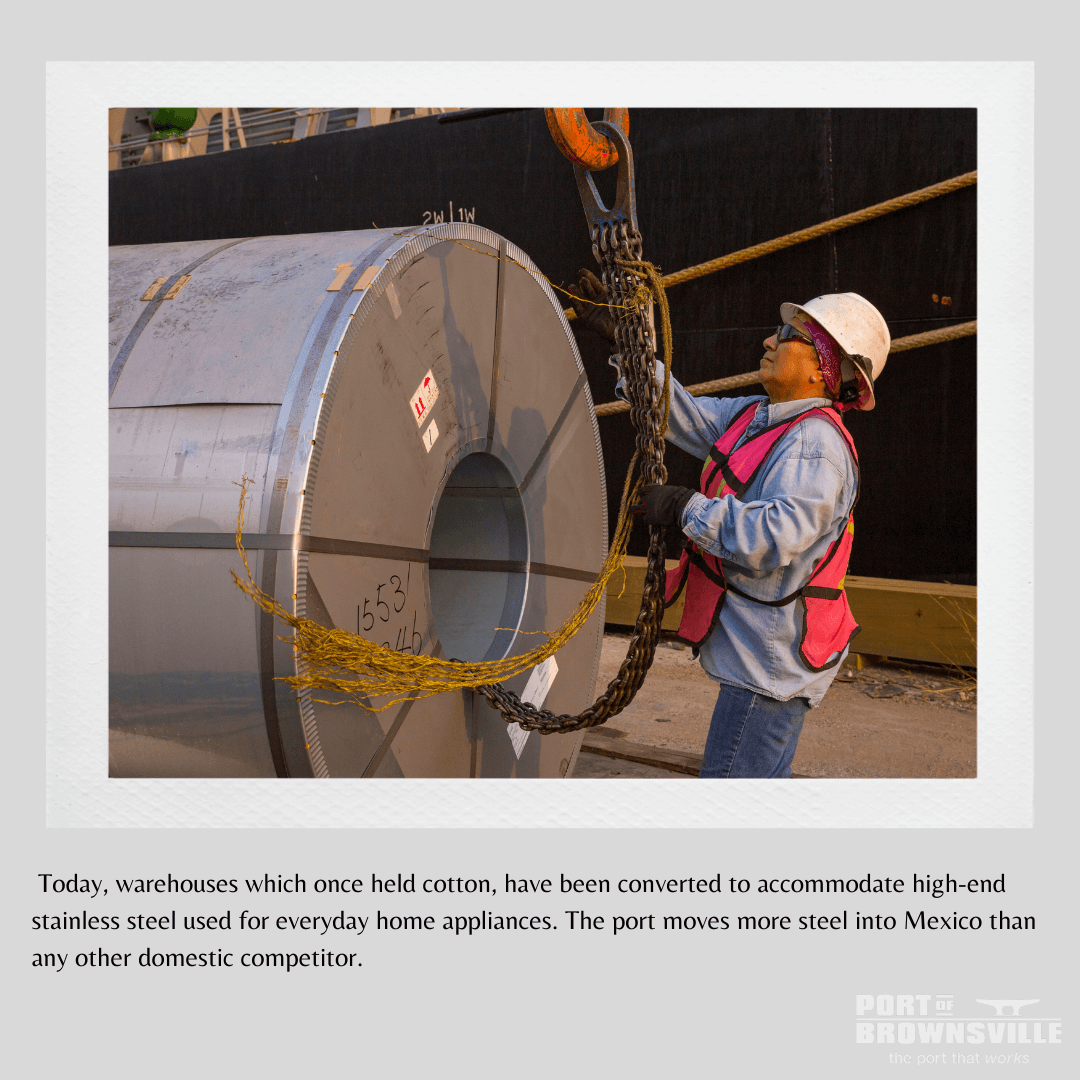
Along the way, Wood contributed significantly to the development and growth of major community institutions that continue to shape Brownsville’s civic and cultural landscape. These efforts include helping to establish the Brownsville Event Center; the Tennis Center, developed with the support of benefactors Al Roser and Carl Chilton; the Mitte Foundation; and Veterans Park, as well as negotiating the City of Brownsville’s purchase of landfill property from the Port of Brownsville.
Additionally, with the assistance of historian Chula Griffin, he helped rehabilitate the old city cemetery.
He also provided state‑level testimony on behalf of the Brownsville Public Utilities Board in support of municipally owned utilities and participated in Brownsville Police Department ride‑alongs, experiences he said broadened his understanding of public safety, governance, and frontline decision‑making. Throughout his career, Wood maintained close working relationships with community leaders, including Rubén Edelstein, as part of his efforts to connect local priorities with regional and state institutions.
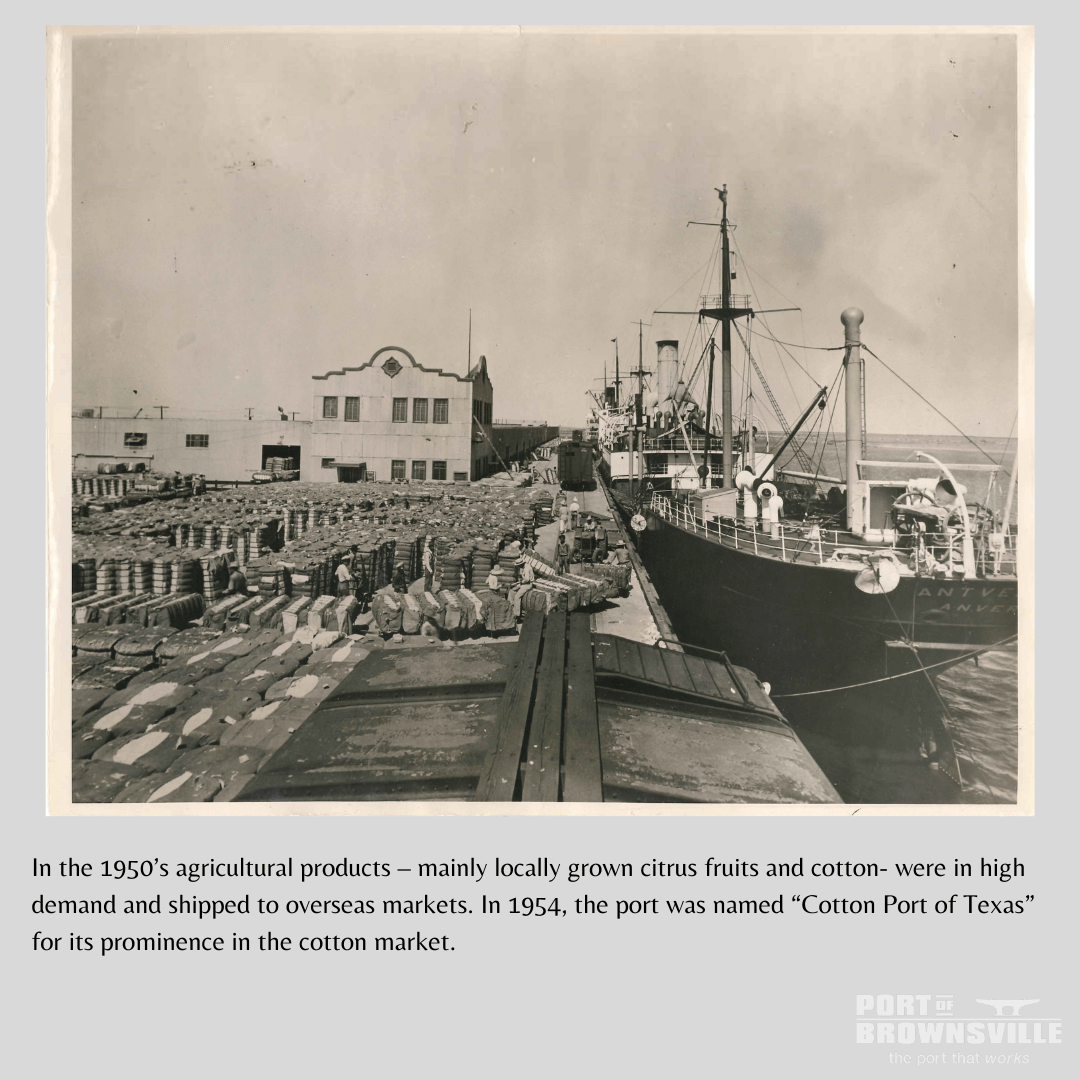
While serving as County Commissioner, Wood worked with Cameron County staff and officials in Mexico City to relocate the rail line out of the cities of Brownsville and Matamoros, creating a safer community and establishing a more direct route from the Port of Brownsville to Mexico.
His last chapter, a 12-year tenure on the Brownsville Navigation District Board of Commissioners, ends with gratitude and a perspective forged by service and responsibility.
He moved to Brownsville to manage the local Southwestern Bell office and quickly became a fixture in community organizations: chairman of the United Way, chairman of the Red Cross, Chairman of the Brownsville Chamber of Commerce, board member for the Girl Scouts, a roster of civic involvement that made him a known quantity among the city’s established leaders.
By 1992, that network had noticed him enough that five of those longtime community figures came to his office and encouraged him to run for the city commission.
He initially lost the race but five months later, the sitting mayor resigned to run for county judge, a vacancy opened, and Wood won. He served the commission from 1993 to 2002 before running and winning an election to serve as Precinct 2 County Commissioner from 2003 to 2010.
As Precinct 2 County Commissioner Wood recalls walking door-to-door in Cameron Park, a colonia of roughly 7,000 residents at the time with unpaved roads, broken drainage, and no sidewalks.
knocking on doors while residents, uncertain of who he was or what he wanted, sometimes closed them in his face, but W remained undeterred.
He secured state funding to rebuild roads in the neighborhood, install a new drainage system, lay sidewalks, and put in streetlights. He also called in a favor from the city’s animal control department to run three sweeps through Cameron Park, where feral dog packs of 25 to 80 animals, including at least one pig that had apparently joined the pack, were running through homes and threatening children. The first sweep picked up approximately 150 dogs, making a major improvement to quality of life in the neighborhood. By the third sweep, the issue was mostly resolved.
“It’s really a good thing to be able to provide that kind of service to people who can’t afford much of anything,” he said. “And once all that stuff got put in, you didn’t find garbage on the streets anymore. People started taking care of it.”
The reward, eventually, was an invitation to mole. “There were a couple ladies out there that could make great mole,” he said. “When they had mole, they’d call me, ‘Come by, we’ve got mole.’”
BND Years
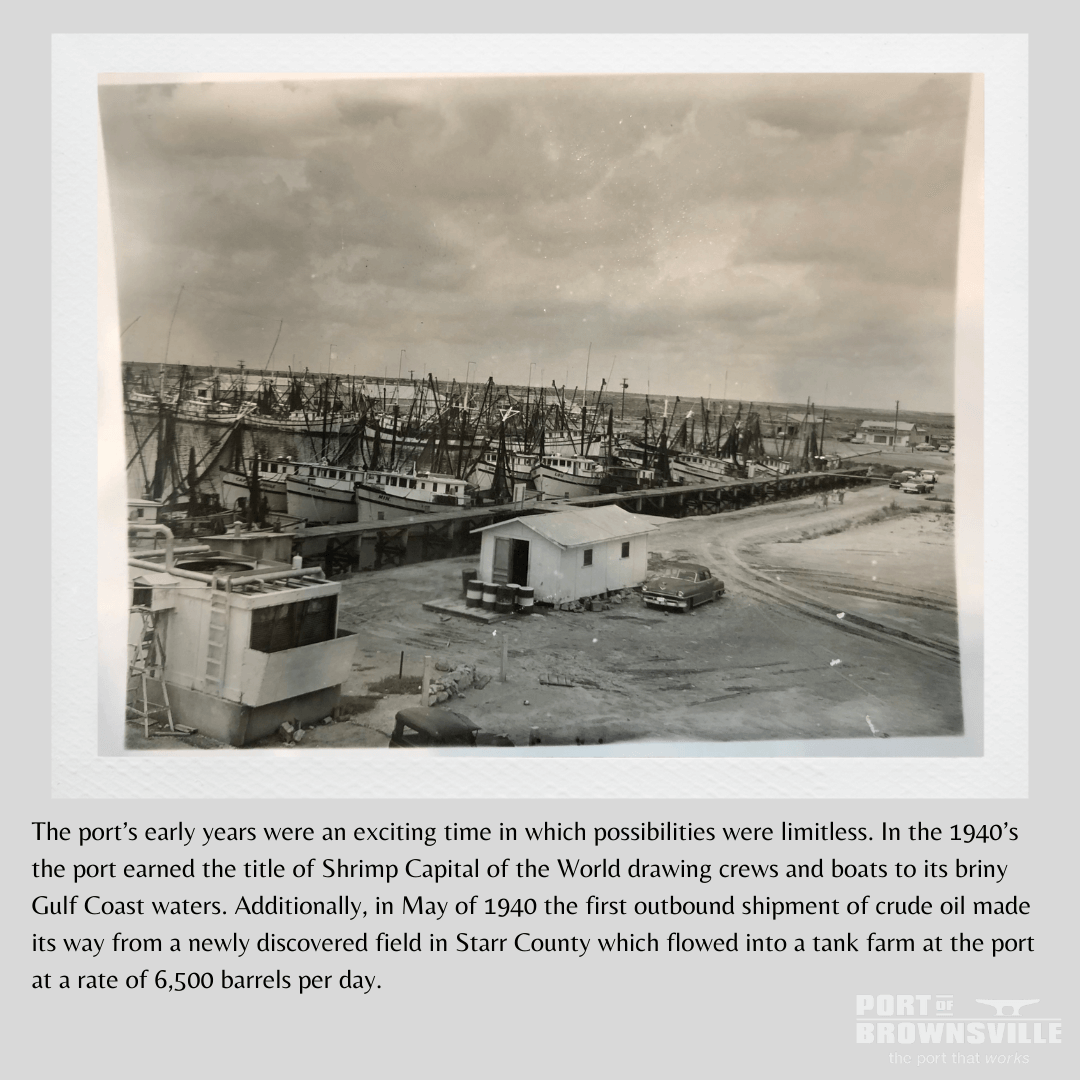
By the time Wood joined the Brownsville Navigation District board in 2014, he had a seasoned bevy of public service experience.
“My experiences with other public entities helped me understand what was going to happen in another public entity,” Wood said. “None of the three are exactly alike at all. But the whole public service entity is something different from being in business.”
That perspective shaped his priorities from nearly his first weeks in office.
Within months of taking his seat, Wood discovered that the port’s employee retirement program was severely underfunded sitting at roughly 40 percent of what it should have held, after investment losses years earlier had wiped out the bulk of the fund. With then-port director Eduardo Campirano and port staff, Wood pushed his fellow commissioners to commit $50,000 per month in additional contributions to rebuild it. Today, the fund is funded at a healthy and sustainable level.
When Wood arrived, the port’s minimum starting wage was $7.25 an hour, the legal floor. He argued, debated, and eventually prevailed through a series of increases: first to $10, then $12, then $15. Today, the port’s average hourly employee earns approximately $20.60 an hour, or roughly $25.75 when benefits are factored in.
“I always felt like no entity, whether a business or a public entity, gets anything done without their employees,” Wood said.
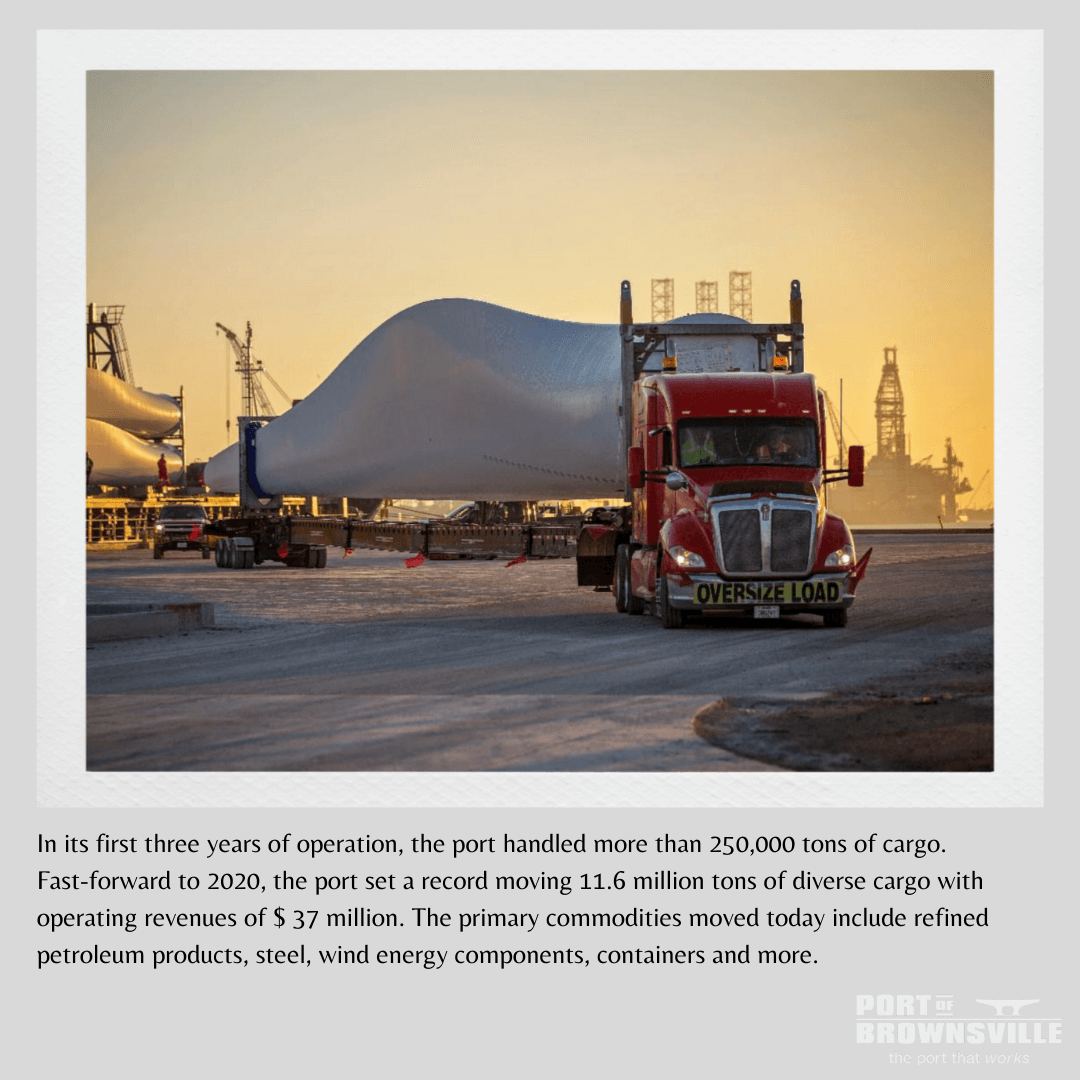
Wood was among the commissioners who worked alongside port staff and the United States Army Corps of Engineers (USACE) to advance the channel deepening project from 42 feet to 52 feet, a multiyear effort that required navigating a public-private partnership with NextDecade, the LNG company that contributed an estimated $450 million toward Phase 1 of the channel deepening. The port and USACE covered the remainder for Phase 2 of the project, approximately $135 million.
“We are deepening the channel for the future of the community not just the port community, the entire community,” Wood said. “The idea of the port has always been the ability to bring in work and business, to employ people from the community.”
Wood worked with port staff to get seven easements released on the north side of the channel, removing a legal vulnerability where Corps of Engineers easements overlapped with active industrial tenant sites. Work on the south side is ongoing.
Wood served on the port’s policy committee, where commissioners and staff spent years — line by line — overhauling port policies and ultimately producing Tariff No. 7, the first comprehensive tariff revision since 2007.
Wood was a consistent voice for keeping the port’s tax rate, currently $0.025 per $100 of property value, as low as legally possible, relying instead on Tax Increment Reinvestment Zone (TIRZ) revenues from expanding industrial tenants to fund port infrastructure.
Wood described a personal framework he applied to every potential port tenant he was ever asked to weigh in on: environmental impact first, number of jobs second, wages third.
“We have to have a clean community,” he said. “We don’t want to be like Houston or even Corpus Christi, where you have to smell dirty smoke.”
As chamber chairman, he cultivated a friendship with the federal bridge official overseeing the Gateway International Bridge during a period when truck backup stretched for hours. The official couldn’t speak publicly, but would tell Wood privately which phone calls to make and which buttons to push in Washington. Wood eventually appointed him to the chamber board.
“That was very, very helpful for the entire community,” he said.
He attended Rotary Club meetings in Matamoros regularly. He traveled to Mexico City with the county delegation to secure Mexican government sign-off on the Veterans International Bridge. He learned, over decades, that relationships built quietly tend to outlast the controversies that test them.
His leadership style evolved toward trust in his colleagues and restraint in his own reach. At the port, despite his extensive real estate expertise from a private-sector career in the industry, he deliberately stayed off the real estate committee. Doing so allowed new tenants to make their initial presentations with confidence in the judgment of his fellow commissioners and reflected his belief in the importance of respecting boundaries and avoiding the damage that can occur when board members overreach into one another’s lanes.
“There were certain things I would have done differently,” he said. “But I wasn’t on that committee, and I felt like I needed to support their decisions.”
Familial Support
Wood is quick to credit his wife, Dr. Virginia, a university professor, as the reason any of it was possible.
“Virginia always went everywhere I went,” he said. “She was always willing.”
Wood fondly recalled campaign photos spanning three decades showing the same progression: their two sons, small boys at first, holding up yard signs for city commission. Then older, holding signs for county. Then grandchildren holding signs for the port.
At community events where his Spanish wasn’t strong enough to carry a full conversation, they divided the room: Virginia sat with the women, Wood sat with the men. Both worked.
“That’s the only reason I’ve been able to devote the time I’ve devoted to my elected offices,” he said. “Because I’ve had the support of my family.”
He also credits Virginia’s parents, who supported his public service through the earlier years, and notes with evident warmth that after 52 years of marriage, “Virginia continues to take care of me.”
Looking Ahead
Wood’s counsel for whoever follows him is characteristically practical: know what you don’t know, build relationships before you need them, and play the long game.
He saw Cameron Park transform gradually, not overnight. He watched the channel deepening move through years of permitting before a single cubic foot of sediment was removed.
“You’ve got to have some consistency to work toward something,” he said.
On wages, on the environment, on employee benefits, his advice is to hold the standard and argue for it, even when the argument is unpopular.
“Improving personnel, taking care of the community, and seeing to it that we can create as many opportunities for people in the community to make a living” that, he said, is the job.
He leaves with the port still mid-stride on several fronts, Texas LNG’s long-anticipated construction start, the refinery he’s been waiting a decade to see break ground for real. He doesn’t seem troubled by that. Experience has taught him that in Brownsville, meaningful progress is measured over the long term.