By Jasmin Nicole Espinosa
BROWNSVILLE, Texas — July 14, 2026 — Under partly cloudy skies, vessel engines are ready, fishing nets are prepared and the wait is nearly over for Gulf shrimpers as the commercial shrimp season officially opens July 15 in Texas and federal waters of the Gulf of Mexico.
On July 8, community members, shrimpers and their families gathered at the Port of Brownsville’s Fishing Harbor for the annual Blessing of the Fleet, where a unique double blessing was held on the dockside at Zimco Marine facilities.
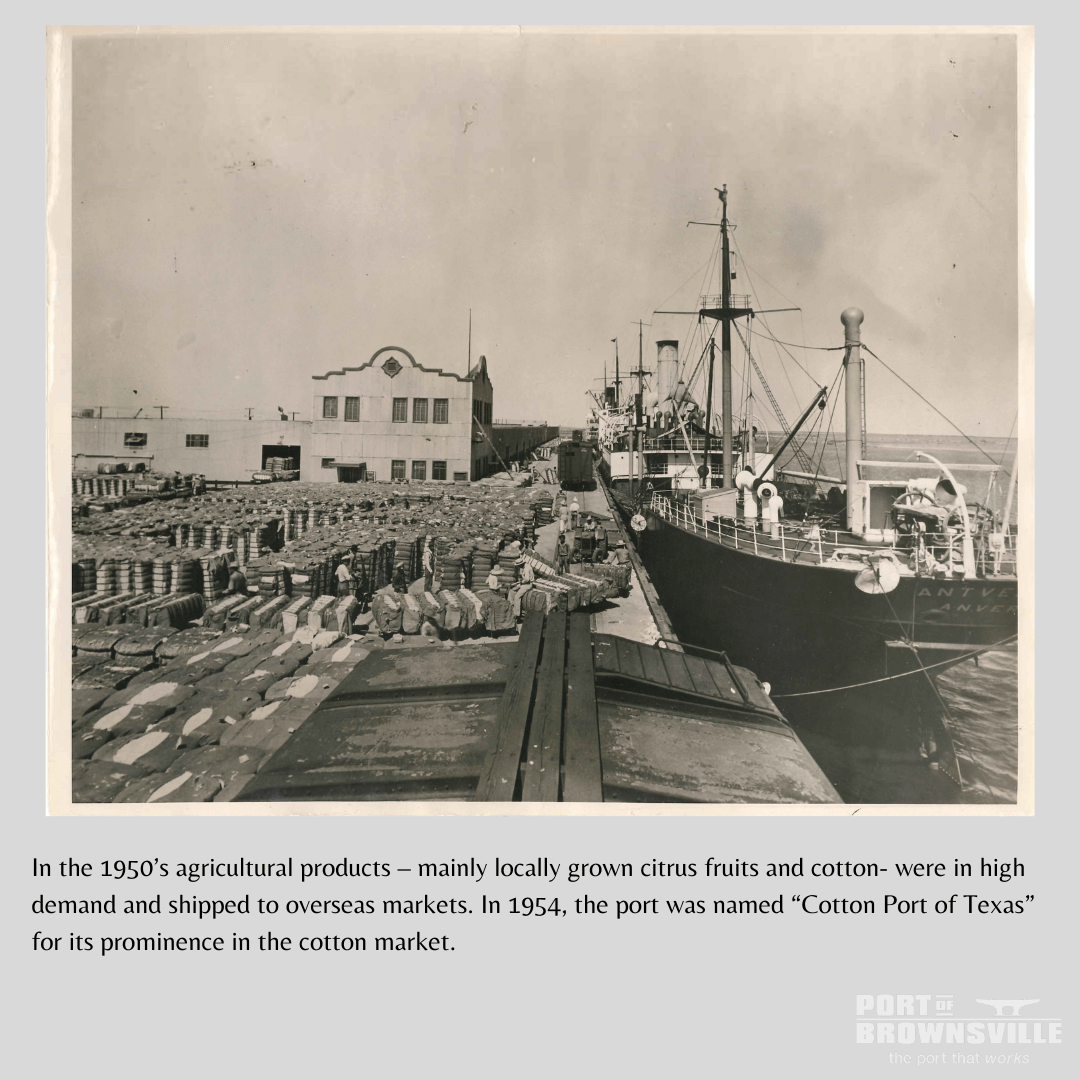
The introduction of frozen foods in the 1940’s helped expand the shrimping industry. As the industry continued to grow, the Port of Brownsville built a dedicated shrimp harbor along the Brownsville Ship Channel in 1953.
The ceremony began with Captain Carlton Reyes, of Reyes Marine Industries Inc., recognizing the members of the local shrimping community who died over the past year. This includes Captain Eduardo Perez Hernandez, Captain Javier Hernandez, Jorge Gonzalez, Julio Gonzales, Ana Idalia Reyes, and Arturo Garza.
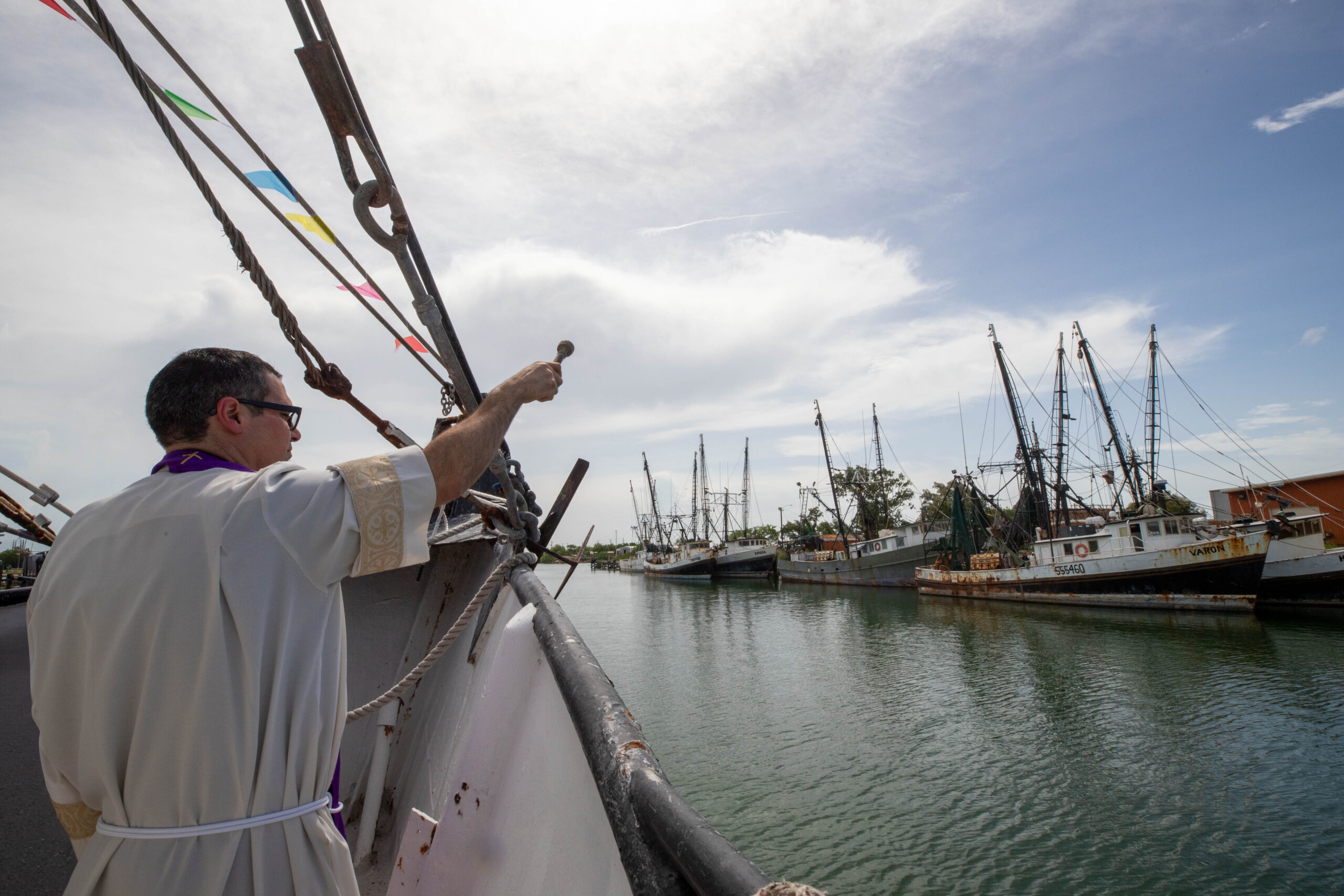
Reverend Joel Flores of Immaculate Conception Cathedral conducts the Blessing of the Fleet on July 8 at the Port of Brownsville Fishing Harbor, sprinkling holy water and praying over the vessels for a safe voyage and a successful shrimping season.
Brownsville Navigation District (BND) Chairman Sergio Tito Lopez, BND Commissioner David A. Garica and BND Commissioner Luis H. Villarreal joined community leaders in showing their support for the upcoming season. U.S. Senator Adam Hinojosa, Representative Janie Lopez, Representative Erin Gamez, and Todd Smith, Chief of Staff of the Texas Department of Agriculture addressed the community, recognizing the importance of the local shrimp industry with encouraging words. Messages of support were also shared on behalf of Governor Greg Abbott, U.S. Senators John Cornyn and Ted Cruz, and U.S. Congressman Vicente Gonzales.
Following the remarks, Captain Reyes welcomed the crowd aboard the Lisa Gema and guided the shrimp trawler slowly along the shrimp basin. As the vessel passed through the fleet, Reverend Joel Flores, of Immaculate Conception Cathedral, led the prayer and conducted the Blessing of the Fleet, sprinkling holy water while praying over the vessels for a safe voyage and a successful shrimping season.
Chaplain Andreas Lewis, of the International Seafarer Center, prayed for an abundant harvest and for the safety of the captains and crew members recognizing the work out sea can be dangerous. “We pray for those who set sail, that you would keep them and their families safe, both going and coming. We pray for the shrimp harvest, that You would multiply it,” Lewis said.
Today, the shrimp industry is facing challenges that include a shortage of work visas, rising fuel prices, and competition from imported shrimp.
“There used to be upwards of 12,000 vessels that applied for permits to fish in Texas waters and now that number is somewhere around 800,” Chris Londire said. “Because of the decline of the industry, of those 800, maybe 600 or 500 are actually fishing, actually have the funds, and the crews and the availability to go fishing,” he added.
Landrie said that support from the community and elected officials is needed to help keep the local shrimping industry alive. “We need help. We desperately need help. This industry is going away, it will not exist,” he said.
In an effort to help Texas Gulf shrimpers, in 2025 the Texas lawmakers passed Senate Bill 823 which requires food service suppliers, wholesalers and distributors in Texas to label whether the shrimp they’re selling is imported.
Senate Bill 823 supports Texas Gulf shrimpers by requiring restaurants and food service to provide whether the shrimp they serve is imported or Gulf, American, domestic or Texas-caught. The law helps consumers be more aware of the shrimp they buy and promotes Texas-caught shrimp. Therefore, giving local shrimpers a better opportunity to compete with imported shrimp.